
.svg)
Tasmania on a tank: The 2026 Nissan Qashqai e‑POWER takes on the ultimate Aussie roadtrip

It was, on the face of it, a mountain to climb.
Multiple mountains, in fact, because the ambitious goal was to drive around the island state's craggy countryside on just one tank of fuel aboard the 2026 Nissan Qashqai e-POWER.
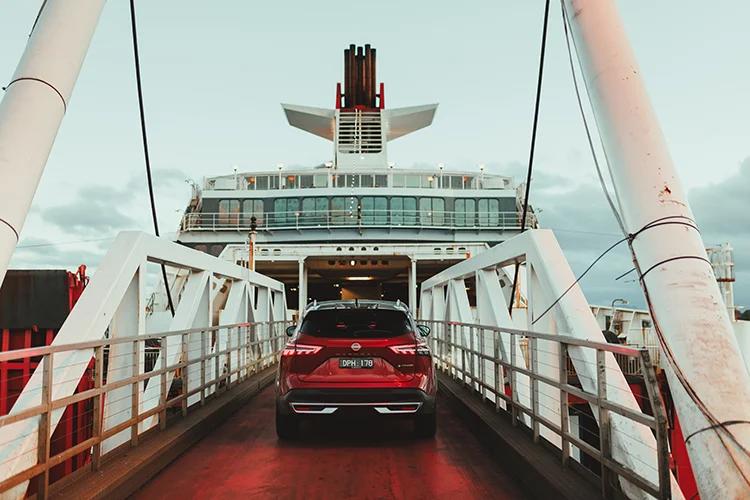
With no special preparation other than a plan to top the 55-litre tank and drive Nissan's even more efficient SUV onto the Spirit of Tasmania ferry at Geelong, in Victoria, our round-Tasmania driving loop without refuelling was underway.
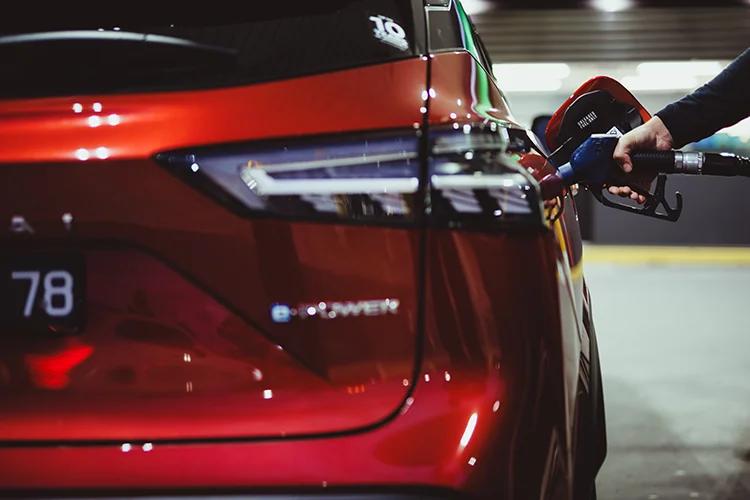

The route chosen was clockwise because as the pre-drive planning theory went, the most testing leg of the journey would be up and down the windy, precipitous roads of the wild West Coast from Hobart to Strahan and then to Burnie, on Tasmania's north-west coast. In other words: save what fuel we had left for the toughest leg of the journey and then simply coast back to the ferry.


The loop on paper was originally intended to be a shade over 1100kms in all, but would turn out to be significantly more due to the necessary side excursions. After all, it's well-nigh impossible to take a Tassie road trip without veering off the main roads to sample the many gourmet delights the state has to offer such as its apples, cheeses and seafood. All bulged our bellies and the Nissan's picnic hamper along the way.
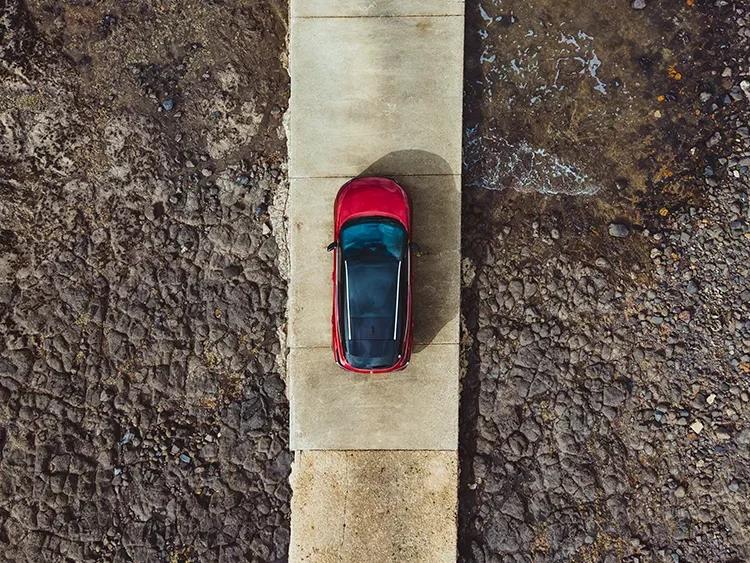

Tasmania's notoriously unpredictable weather took a favourable swing, at least for the first day or two. Under sunny skies, the Qashqai was pointed eastwards from its arrival berth at Devonport to the stunning Tamar River, past the recently demolished Bell Bay power station, and the many award-winning Tamar Valley wineries.


Sadly, it was too late in the season to stop by the popular midsummer lavender farm blooms, but the Qashqai plied its way between the chocolate brown rolling paddocks around Scottsdale, a spud source for millions of fries consumed nationally.
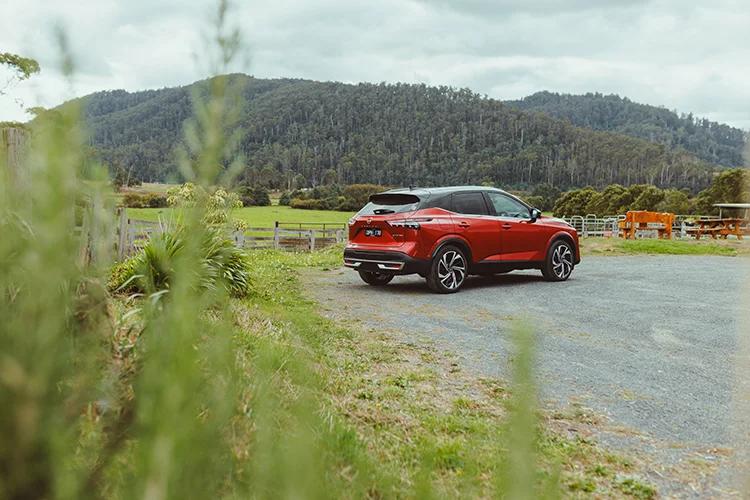

Next stop was Pyengana, home to what appear to be some of the most contented dairy cows on the planet and the deposition of the most delicious of Tasmania cheeses into the car's hamper.


Winding down through the spectacular alpine rainforest of the steep Weldborough Pass to the east coast, the e-POWER's regenerative braking went to work, topping the on-board battery and saving precious fuel.


Georges Bay oysters are irresistible here, as is the need to steer the Qashqai out to the bay's coastal fringe where a distinctive orange-red lichen coats the granite boulders of the conservation area, licks of prehistoric flame against the setting sun.

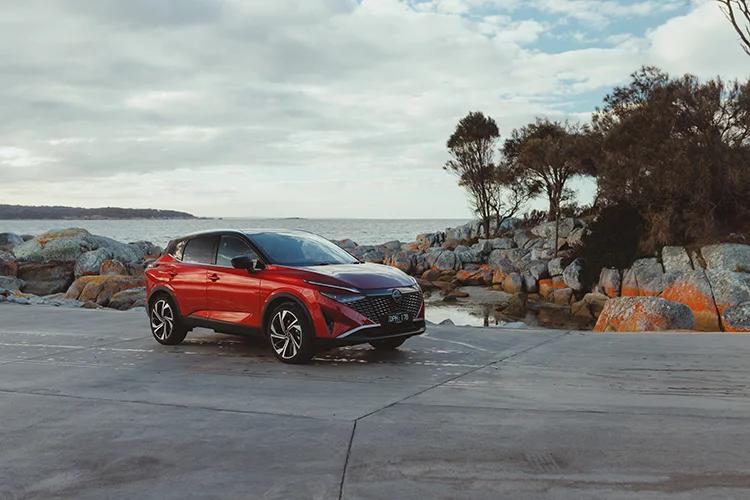
Here among the shacks and many boat ramps, there's a quiet pace, crystal clear water and a friendly wave from the fishermen before the coastal route winds south again, one empty golden beach after another – including well-known surfing spots like Dark Hollow, Shelly Point and Chain of Lagoons – passing by the side windows.


The fuel economy of the roomy Nissan, through frequent use of battery regeneration and staying in the e-POWER's eco-mode, was hugely surprising. Optimism rose further as the unmissable Bicheno harbour, heaving with locals and tourists, finally came into view.
Our overnight stopover was Triabunna, before next morning tracing the Prosser River from Orford and cutting across to Richmond, steeped in history and home to arguably the tastiest pies and vanilla slices in the state.

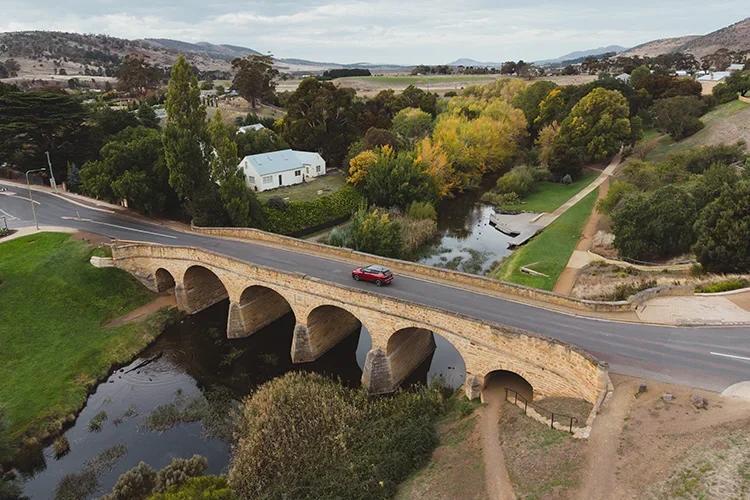
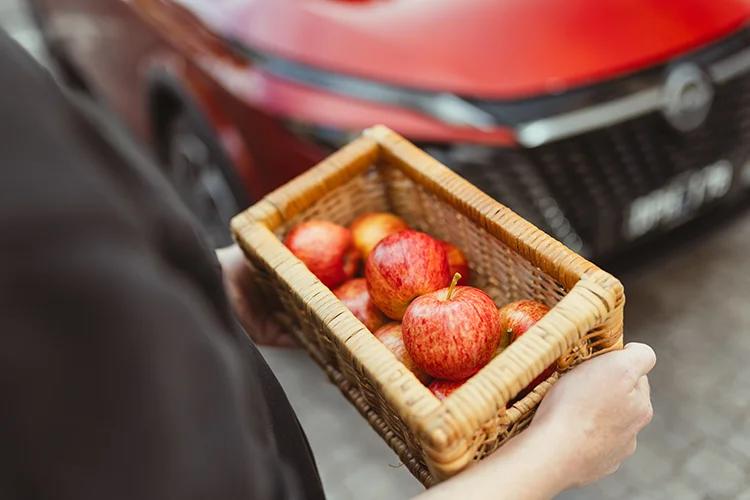
Once dubbed the world-famous Apple Isle, exports of Tasmania's best-known fruit plummeted 50 years ago but many boutique Huon Valley orchards now have been replanted. Crunchy, freshly picked Royal Galas went into the hamper for the journey up the Derwent Valley, past the stunningly restored sandstone cottages of Hamilton and onward to the West Coast.

There's only one way in and one way out through the huge chunk of south-west Tassie known as the Wild Rivers National Park, and a check of the forecast - always a vital task when driving the island state - revealed a massive cold front was on the way.


Pushing to make up time as huge grey clouds scudded in, the Qashqai was taken briefly off the bitumen via the smooth Victoria Valley dirt roads to the extraordinary Lake St Clair, inside its own national park.

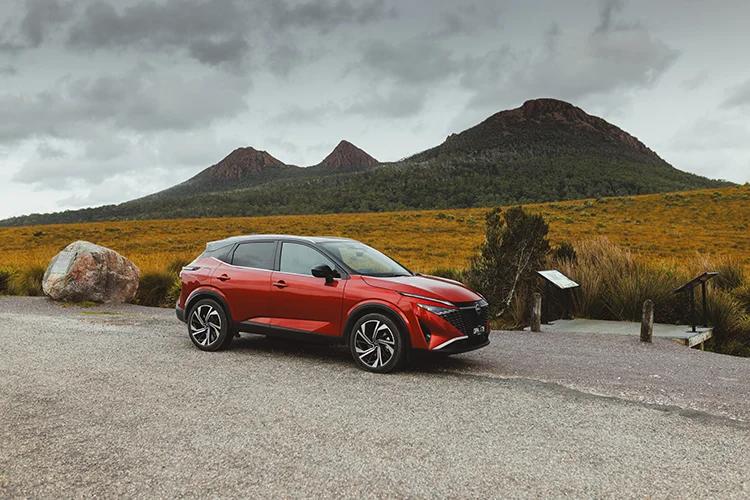
But our destination was further west at Strahan via the infamous 99 bends into Queenstown. Again, the e-POWER regeneration downhill offered much-needed fuel-saving assistance for the uphill climbs so the Nissan's fuel tank remained just under half-full at the shores of Macquarie Harbour. The seemingly impossible loop now was looking probable.


For over a century, billions of dollars' worth of copper and other precious metals were mined out of the west at a huge environmental cost. While the mines all but shut down in 1994, Mother Nature has fought back valiantly and as the forests thicken, now the log trucks rumble in and out at a hectic pace seemingly oblivious to heavy squalls of rain and occasional hail which commonly flog the Murchison Highway.
Finally, there was a joyful glimpse of a wind-whipped Bass Strait and the busy port of Burnie below with its mountain of woodchips destined to be turned into premium paper in export markets.
With still a quarter of a tank of fuel and some 300 kilometres left on the Nissan's distance-to-empty computer, celebratory curried scallop pies were gleefully consumed in the town of Penguin.
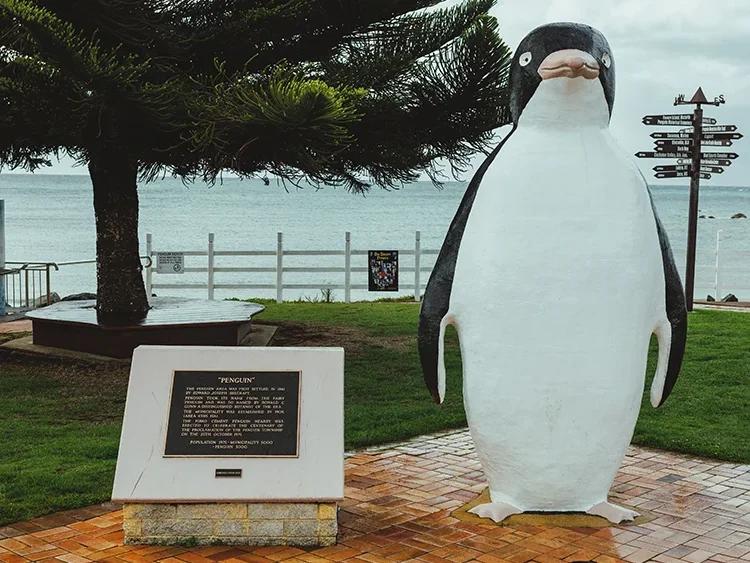

Its fickle weather aside, Tasmania's spectacular sights and wonderful foods never disappoint as a driving holiday destination for the family. And neither did the Qashqai e-POWER, completing a fulsome road loop of the state - including multiple side-excursions - with fuel to spare.


At the lap's conclusion in Tasmania, back aboard the Spirit of Tasmania ferry, the Nissan Qashqai's trip computer showed 1209.2kms at an average fuel use of 4.5L/100km, even after challenging former rally car routes had been tackled. But that number had grown to 1303km, again at an average 4.5L/100km, before the distance-to-empty reading finally hit zero kilometres.

DISCLAIMER
Figures stated above are accurate for this Tasmanian trip completed by the MY26 Nissan QASHQAI e-POWER based on 4.5L/100km fuel consumption and 55L fuel tank capacity. Figures stated for the purposes of comparison amongst vehicles only and may not reflect your real-world driving results. Actual driving range and fuel consumption depends on factors such as traffic conditions, vehicle condition, how you drive and any accessories fitted.

# # #
Contacts:
Steve Coughlan
Head of Communications Oceania
Nissan Motor Co. Australia
Email: Steve_coughlan@nissan.com.au
Angus Thompson
Senior Manager Corporate Communications
Nissan Motor Co. Australia
Email: Angus_Thompson@nissan.com.au
